
Brass & Copper Bright Dip
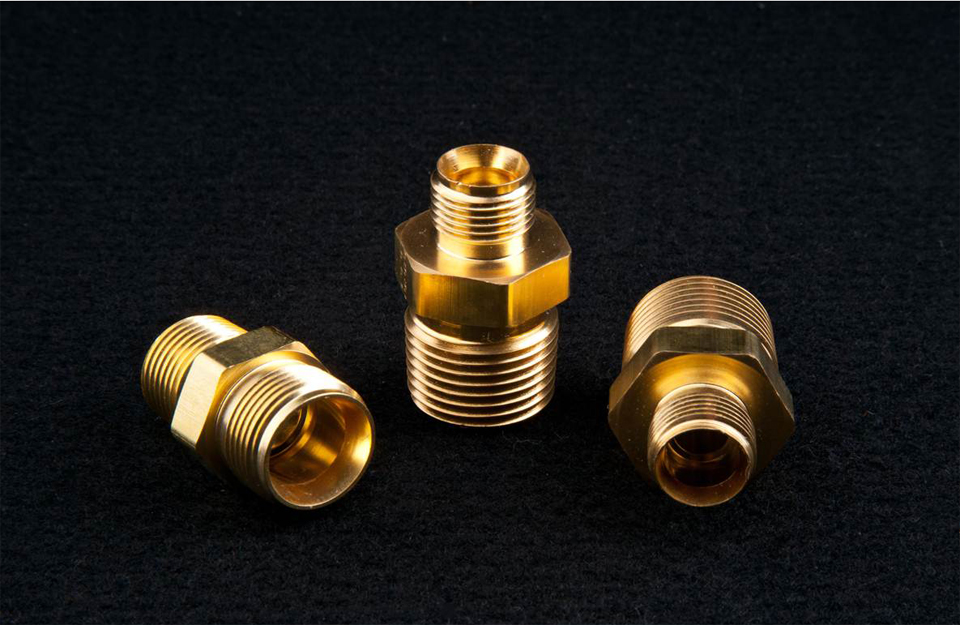
Brass & Copper Bright Dip
When brass and copper components require a clean, smooth, highly reflective finish, bright dip provides an efficient alternative to mechanical polishing. Hale Performance Coatings offers precision brass and copper bright dip services that chemically polish the base material to improve cosmetic appearance and surface uniformity for manufacturers across North America.
Unlike electroplating or coating processes, bright dipping does not add material to the surface. Instead, it removes a microscopic layer of the existing metal to create a brighter, more uniform finish while preserving dimensional accuracy. Whether you’re preparing components for subsequent finishing operations or producing attractive finished parts, our team can recommend the right bright dip process for your manufacturing requirements.
What Is Brass & Copper Bright Dip?
Brass and copper bright dip is a chemical polishing process that produces a smooth, lustrous finish without the need for mechanical buffing. After components are thoroughly cleaned, they are immersed in a carefully controlled acidic solution that selectively dissolves microscopic surface irregularities while minimizing removal of the underlying material.
This chemical leveling process creates a brighter, more reflective appearance while improving surface consistency across production runs. Following the bright dip process, components are rinsed, neutralized when required and dried to produce a clean, high-quality finish.
Because the process relies on precise control of solution chemistry, temperature and immersion time, manufacturers can achieve repeatable, consistent results on high-volume production components.
Benefits of Brass & Copper Bright Dip
- Bright, reflective finish: Produces a clean, attractive appearance without mechanical polishing.
- Improved surface uniformity: Removes microscopic surface irregularities for a smoother finish.
- No added coating: Chemically polishes the existing brass or copper surface rather than depositing another metal.
- Excellent preparation for additional finishing: Creates a more uniform surface before lacquering, protective coatings or other finishing processes.
- Reduced manual labor: Eliminates many of the inconsistencies associated with hand polishing and buffing.
- Consistent production quality: Controlled processing delivers repeatable results across large manufacturing runs.
- Preserves part geometry: Removes only a microscopic amount of material while maintaining critical dimensions.
Common Applications for Brass & Copper Bright Dip
Brass and copper bright dip is commonly used on components where appearance, cleanliness and finish consistency are important.
Common applications include:
- Decorative brass components
- Architectural hardware
- Plumbing fittings
- Electrical connectors
- Copper bus bars
- Musical instrument components
- Lighting fixtures
- Industrial fittings
- Precision machined brass parts
- Manufactured copper components
Industries That Use Bright Dip Finishing
- Architectural products: Decorative brass hardware benefits from a bright, uniform appearance.
- Electrical manufacturing: Copper components can achieve a cleaner, more consistent finish before assembly.
- Industrial manufacturing: Production parts requiring cosmetic consistency benefit from repeatable chemical polishing.
- Consumer products: Bright dip enhances the appearance of brass and copper components used in finished goods.
- Lighting and decorative hardware: Manufacturers rely on bright dip to create an attractive finish before protective lacquers are applied.
Bright Dip vs. Electroplating
Although they are sometimes confused, bright dip and electroplating are very different processes.
- Brass and copper bright dip: Bright dip chemically polishes the existing brass or copper surface by removing a microscopic layer of metal. The process improves brightness, smoothness and surface consistency without adding any material.
- Electroplating: Electroplating deposits an entirely new metallic layer, such as nickel, chrome or copper, onto a component to change its surface properties.
If your goal is to improve appearance while preserving the original brass or copper surface, bright dip is often the preferred solution.
Why Choose Hale Performance Coatings for Brass & Copper Bright Dip?
Hale Performance Coatings provides precision brass and copper bright dip services for OEMs, manufacturers and industrial operations throughout North America. Our experienced team understands the process controls necessary to deliver consistent, high-quality finishes while supporting demanding production schedules.
Whether you’re improving cosmetic appearance, preparing parts for additional finishing or supporting a high-volume manufacturing program, Hale Performance Coatings delivers dependable bright dip services backed by decades of industrial finishing expertise.
Contact our team today to request a quote or schedule a consultation.
FAQs
What is brass bright dip?
Brass bright dip is a chemical polishing process that removes a microscopic layer of brass to create a smoother, brighter and more reflective finish without mechanical buffing.
What is copper bright dip?
Copper bright dip uses a controlled chemical solution to polish copper surfaces, improving appearance and creating a clean, uniform finish while preserving the base material.
Is bright dipping the same as electroplating?
No. Bright dipping chemically polishes the existing brass or copper surface. Electroplating deposits a new layer of metal onto the component. Bright dipping does not add a coating or plating layer.
Why do manufacturers use bright dip?
Manufacturers use bright dip to improve cosmetic appearance, increase surface uniformity and prepare brass or copper components for additional finishing processes such as lacquering.
Where can I find brass or copper bright dip near me?
If you’re searching for brass bright dip, copper bright dip or chemical polishing services near you, Hale Performance Coatings serves manufacturers across North America with precision bright dip finishing for production applications.